

Imagine a chilly winter evening. You can hear the pitter patter of rain on the roof above the rustling of the trees outside. It’s the kind of night that begs for you to curl up on the couch with a blanket, fuzzy socks, and some sort of feel good movie or that book you’ve been meaning to finish. Sounds pretty good right? Now imagine that same evening, but with the addition of a comforting, yet nourishing bowl of vegetable chili. Even better.
While Vancouver’s been cooling down, we’ve been warming up with The Endless Meal’s Easy Vegetarian Chili. Made with simple ingredients including carrot, celery, corn, a duo of beans, and a bomb mix of spices, this chili has rightfully earned its spot of one of our go to staple meals.
To suit our tastes and dietary preferences, here are some specific amounts of spices and add-ins that we’ve opted for. We use 3 full tablespoons of chili powder and 2 teaspoons of chili flakes (yes, we love spice!). We also add in a handful of basil and do not include the optional prawn stock. Oil is optional if you choose to sauté in water.
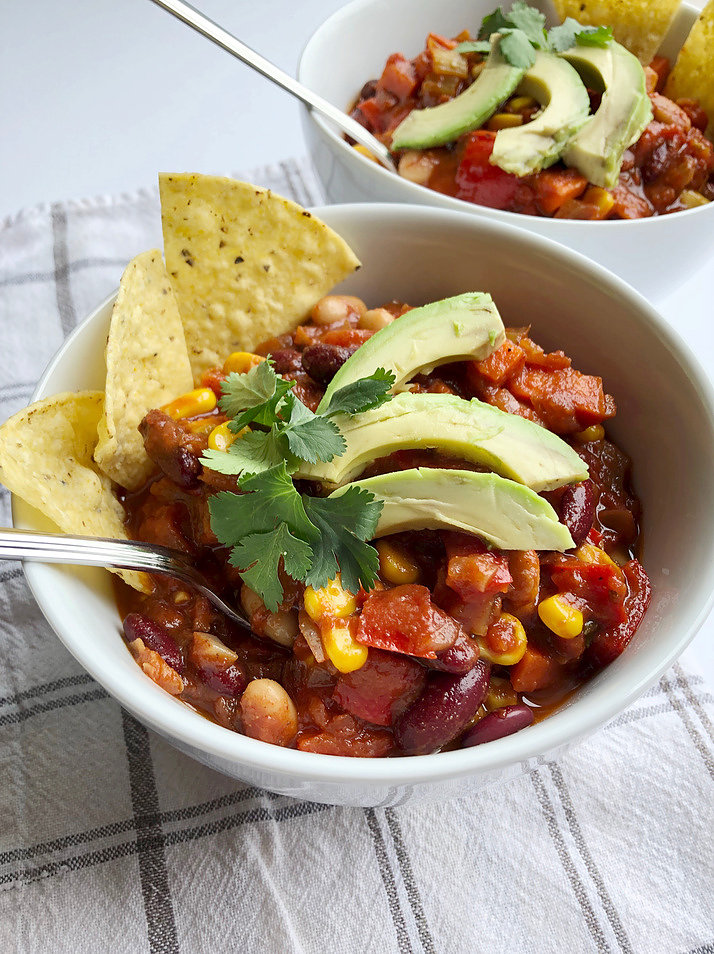
This chili really is delicious on its own, especially topped with some corn tortilla chips, a few slices of avocado, and a few leaves of one of our favourite herbs, cilantro. The chili is also an amazing topper to roasted or baked potatoes, or quinoa.
Featured Ingredient: Beans
One of the main components of this chili is beans, namely the red kidney and the white bean varieties. Beans are considered a concentrated source of plant based protein (red kidney beans provide 6.5grams per half cup!). Given that we don’t consume animal products, we try to contribute a portion or two of some sort of bean or legume in at least one of our meals each day.
Adequate protein intake is vital to overall health. Protein supports growth, maintenance, and repair; it makes up enzymes, hormones, and cell membranes, helps to balance our blood pH level, and it contributes to proper immune function through the action of antibodies.
Though most know of the importance of consuming enough protein to to meet your daily needs, many are unaware of the negative impacts too much protein may have on one’s health. In fact, an overconsumption of protein may contribute to dehydration, calcium loss, and an increased risk of kidney damage. Further, a diet high in animal protein may increase one’s risk for cardiovascular disease due to the high saturated fatty acid and cholesterol content that comes along with the protein in those foods. In contrast, plant based sources of protein provide fibre and phytochemicals (vitamin antioxidants) while being devoid of saturated fatty acids as well as cholesterol.
Some say that plant based proteins should be consciously coupled in one meal to ensure complete intake of essential amino acids. This would involve pairing grains or nuts/seeds with vegetables or legumes. However, by consuming a well balanced diet full of whole foods, including the ones mentioned above, it becomes simple to obtain complete proteins!
Hammond, G. (2017). Protein [PDF document]. Retrieved from University of British Columbia Canvas site.
 alessia eats